
Uncommon Wildlife Sightings, New Flora Blooming Along The Rattlesnake Bluff Trail

In my most recent blog post, I reported on a pair of sandhill cranes nesting on Frontenac Pond. I mentioned the female crane incubates two eggs, but in most cases only one survives after hatching.
On Saturday morning May 23, I photographed two adult cranes walking around in the tall grass between the nest site and Highway 61. Then on May 24, Steve Dietz a volunteer for Frontenac State Park reported the first evening after the second colt hatched it suddenly perished. That left only one healthy colt to survive.

In the early morning of May 20 while exploring the shoreline of Wacouta Bay, I happened across a small flock of Ruddy Turnstones.
This was my first ever sighting of this shorebird. It nests along the coasts of the high arctic and is considered uncommon in Minnesota. Usual sights occur during their spring and fall migrations between the nesting and wintering grounds.

Tony Vogel shared this great photo taken in his front yard along the shore of Lake Zumbro near Zumbro Falls.

While biking on the Cannon Valley trail, John Drewes spotted this American toad. He shared this photo because he thought it demonstrated the ultimate example of camouflage.
This species of toad prefers rocky wooded areas like we find along the Cannon River. Thanks John for sharing your photo.
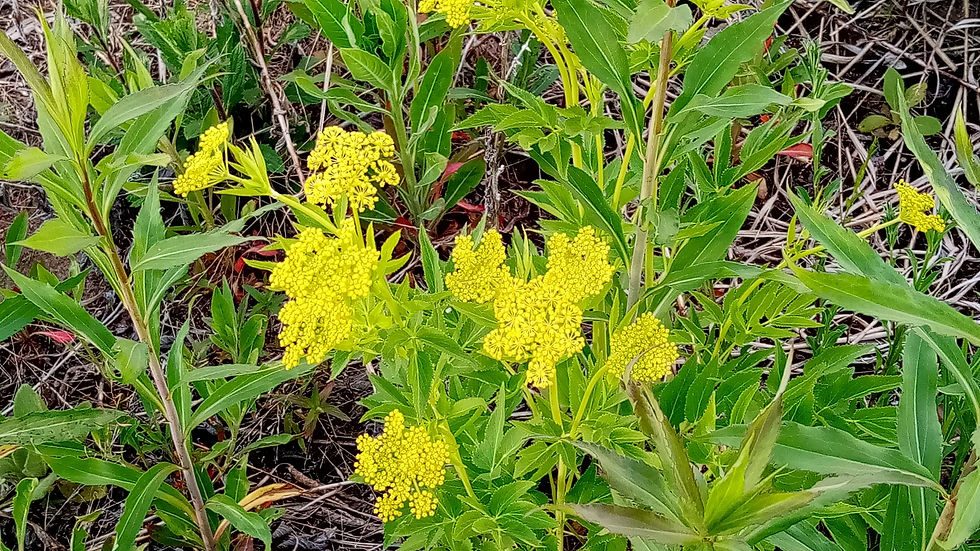
The prairie along the Rattlesnake bluff trail has come to life the last two weeks with a colorful display of colorful prairie forbs.
One such example is the yellow flowers of the Golden Alexander, a member of the carrot family. This plant is a short-lived perennial with branching and erect stems.

The other colorful prairie plant coming to life now in the Spiderwort. These plants were so named because of the angular leaf arrangement appearing like a squatting spider.
Spiderwort flowers open up in the early morning and start to wilt by the afternoon.

In addition to prairie flowers coming to life, several woodland plants along the trail are also in full bloom. Virginia Waterleaf is one of the most visible flowers to be observed in the woodlands just west of the Town Hall.
The common name waterleaf comes from the whiteish spots on the leaves that look like stains.
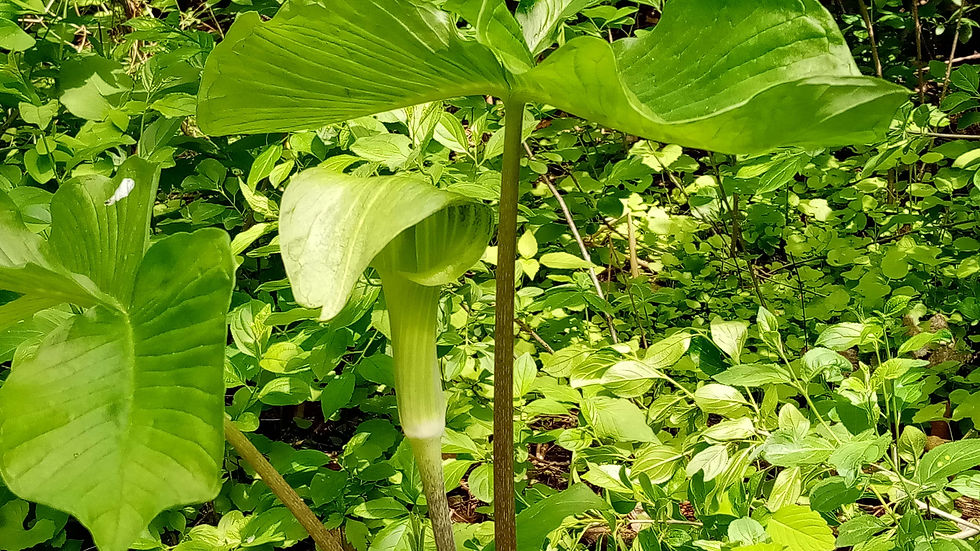
Many jack-in-the-pulpits are now showing up in the thick wooded areas. The intriguing blossoms of this woodland perennial occur on a separate stalk the same height as the leaves.
Native Americans would dig up the underground corms to be used as flavoring in their cooking. These corms are very spicy and should not be eaten raw.

On May 26, the snowy white cottonwood seeds began to fly off the female cottonwood trees and float through the air. We have two very large cottonwood trees in our yard. One is male and one female.
Guess which one is very close to our house? They make quite the mess for the next couple weeks.
I frequently receive reports of pheasant sightings and questions about how they might have survived the winter.
Our neighbor Oliver Olson answered that question by sharing this recent video. Thanks Oliver


Wonderful pictures shared in the blog. I enjoyed all the beautiful plants that are blooming this time of year.