
"July Is Busting Out All Over"
With hot temperatures and periodic rains, the Wacouta Prairie colors and a variety of flora are simply amazing. It seems the prescribed fires in all three parcels has stimulated profound diversity. Even though the river level remains low, the annual mayfly hatches have continued on schedule.

The number of these prairie forbs has increased dramatically from previous summers. The flowers of coneflower have been used to make a popular herbal tea. These plants are easily grown in domestic gardens.
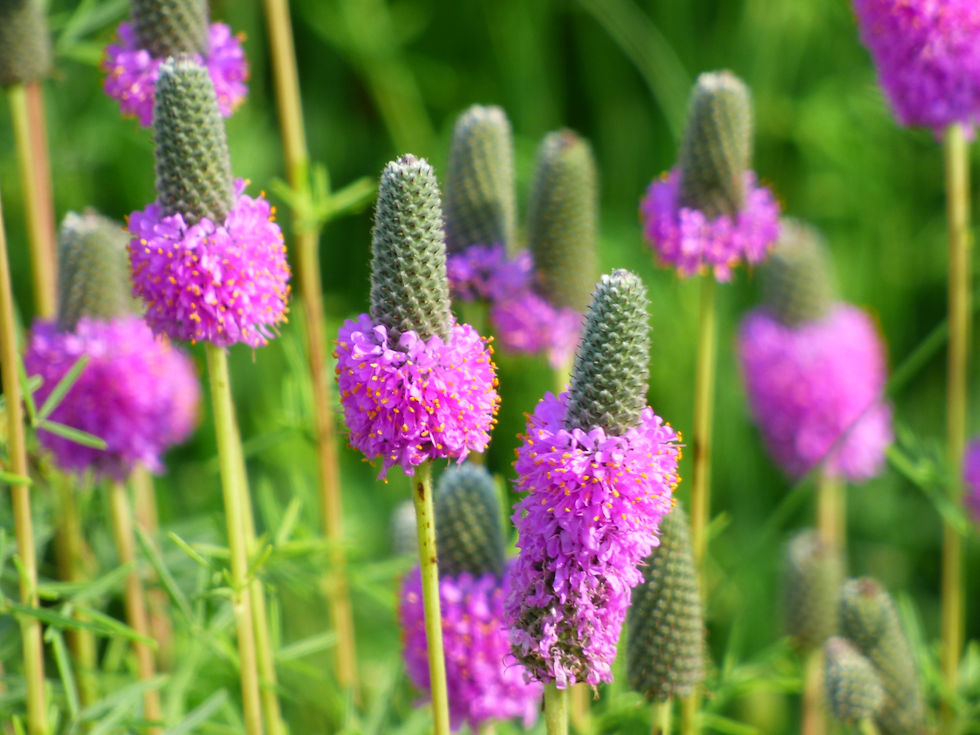
This species of clover is one of the most widespread of all perennial prairie clovers. It is a wonderful plant for pollinators and if you look closely, you will notice it typically grows in clumps.

Bluestem is one of our iconic tall grass plants covering a large portion of Minnesota. Some people refer to the spiklets as they spread out and mature as "turkey feet."
Prior to European settlement, our tall and mixed grass prairie in Minnesota covered close to 18 million acres. Today less than 2% of this prairie ecosystem remains unplowed.

Butterflies are now starting to be observed flying over the prairie as I walk the trail. In addition to a few monarchs, I frequently see the Great Spangled Fritillary.
Eggs from this butterfly are laid in the late summer on or near host violet plants. When these caterpillars hatch, they do not feed but overwinter until the next spring.

During the last week of June and first week of July, I was able to harvest mulberries and black raspberries to add to various dessert recipes. The next edible berries to ripen along the trail are chokecherries.
When eater raw, they are more sour than the earlier berries, but can be made into delicious preserves and jelly. It should be mentioned, the fruit stones are poisonous.

As I mentioned in my last post, raccoons are fond of eating mulberries. They
are also attracted to chokecherry trees.

The Mississippi River mayfly hatch we experience every summer occurred right on schedule. These hatching mayflies spend one to two years in the bottom of the river living as aquatic nymphs.
Because these adults lack mouth parts, they die shortly after emerging and reproducing. In the evening of July 6th, there was an impressive mayfly hatch at the head of the lake.

Despite the fact mayflies create temporary problems for us, many forms of fish and wildlife benefit from this burst of available food. River biologists claim big mayfly hatches indicate a healthy river.
In addition to swallows, flycatchers, starlings, grackles and red-winged blackbirds consuming these insects, purple martins greatly benefit by providing sustenance for their newly hatched young.
Unfortunately since the 1960's, purple martin populations have declined roughly 85% in Minnesota. Fortunately in Wacouta there still exists a healthy colony on Greens Point.

In addition to mayflies, insect eating birds mentioned earlier will also include dragonflies in their diet.

When wind conditions are calm during a mayfly hatch, many land on the surface of the river as they die. When such an event is followed by strong winds and waves, windrows of dead mayflies pile up on the shore.
On more than one occasion, I have observed turkey vultures feasting on this new source of nourishment.

The final photo for this post was contributed by Greens Point resident Joan
Franklin. She noticed this gray tree frog sitting on their porch chair early one morning.
These frogs have the ability to change their colors as a natural survival mechanism. Depending upon where they happen to be sitting, they can shift their colors to gray, brown, green and even white to better blend into their surroundings.


We so enjoy your site and always learn something new ! Thanks so much!
Thanks Bruce for all your knowledge, and pictures.Diane
Hi Bruce, as usual we always learn from your posts. Thank you for continuing to do this. We are all better for your efforts.
Bruce…..As usual, you create a strong reminder of why Wacouta is such a special place! Thank you!