
"Summer 2026 Challenges"
High Temps, Rabbits, Whistle Pigs and Wildfire Smoke. We are experiencing a summer of interesting challenges making for numerous and memorable conversations.

On the evening of July 9th, I took my canoe out for a couple hour tour at the Head of the Lake. Not having water levels high enough to travel into Wacouta Bay, I headed upstream to the upper end of Lighthouse Island and Bay City Bay.
This route afforded me the opportunity to view Rattlesnake Bluff from a much different angle than usual for me.
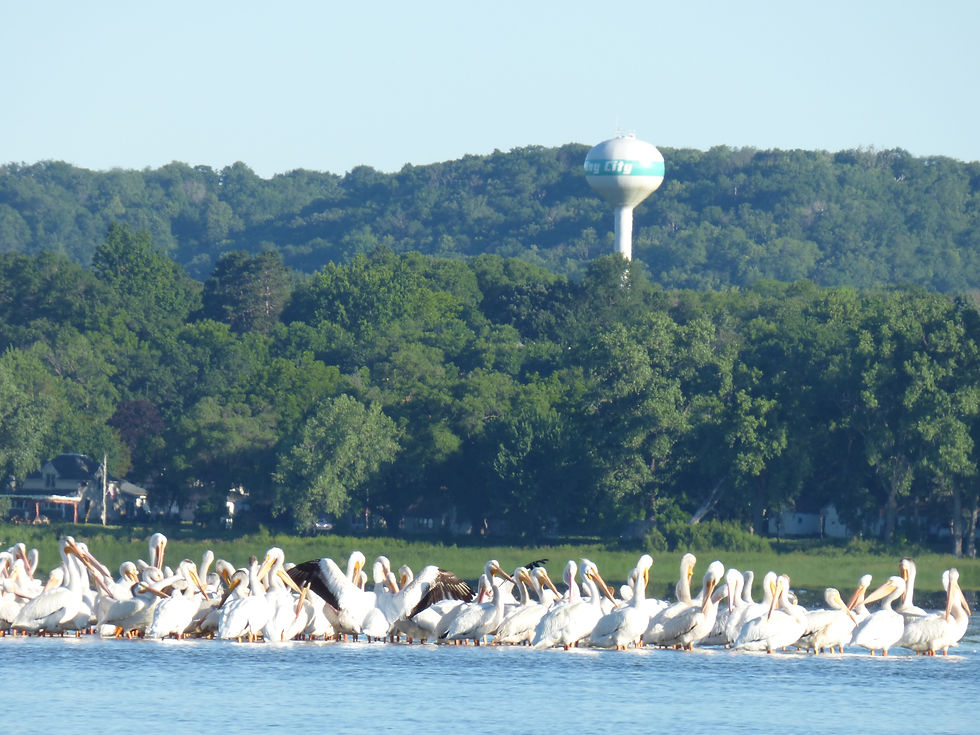
I was not at all surprised to observe two very large pods of white pelicans resting on Bay City Bay.
These birds are attracted to this bay for a couple reasons. The shallow waters discourage disturbing boat traffic and feeding on small fish is much more productive. White pelicans differ from brown pelicans in that they do not dive for their fish.
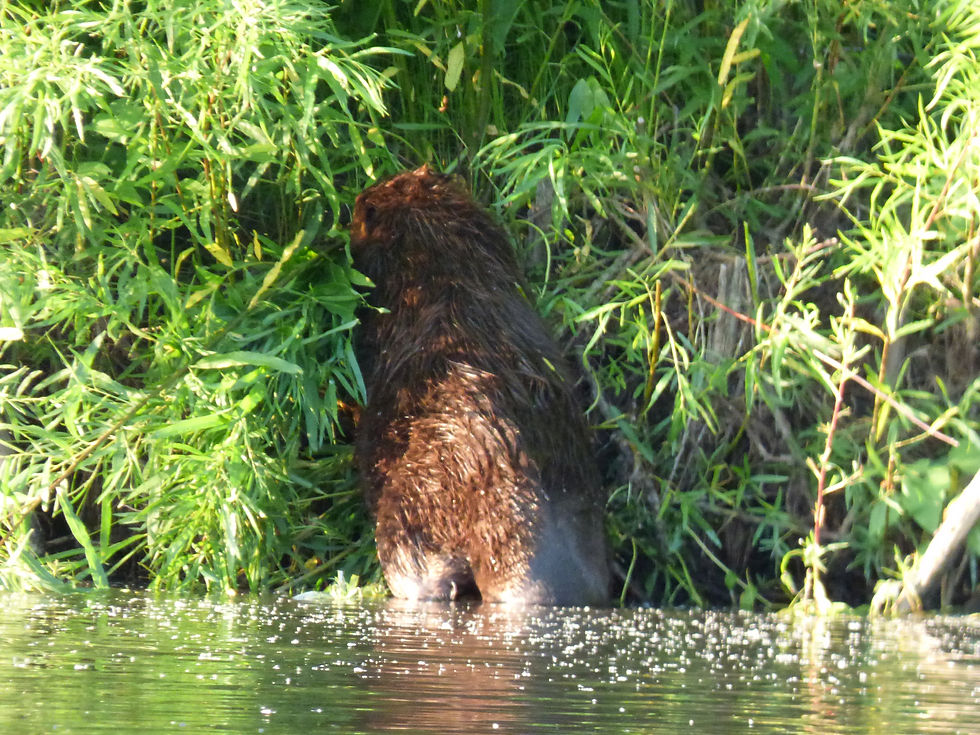
As I paddled on the backside of Lighthouse Island, I encountered four different adult beavers taking advantage of the low water conditions. All four beavers were feeding on the young tender green willow shoots coming up at the water's edge.

During the past couple months, we have observed a pair of bluebirds nesting in our yard twice. In both cases, after the 11 to 19 day incubation period hatching never took place.
Evidently 15% to 20% of bluebird eggs do not hatch. Unhatched eggs are a normal part of the nesting process. Infertility and extreme hot and cold temperatures are the main reasons for this to happen.
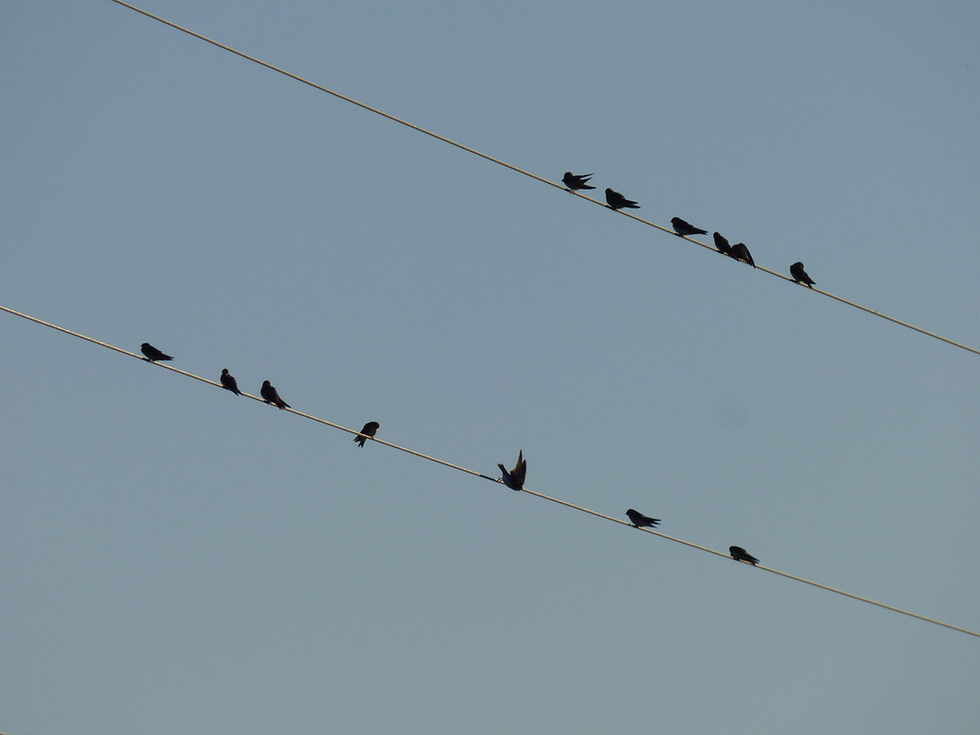
As I walked the trail around the prairie in the early mornings the past couple weeks, I have noticed small flocks of tree swallows gathered on the power lines adjacent to Wacouta Road.
These small flocks of post-fledging swallows and adults are preparing for the upcoming migration. By early August, these flocks will grow to impressive numbers.
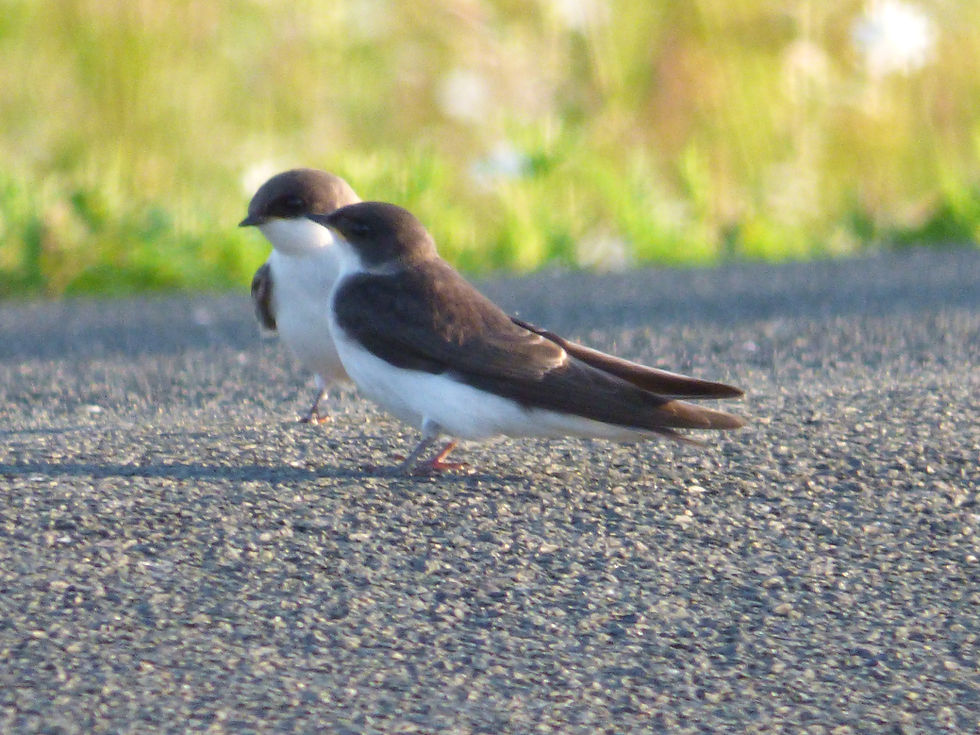
Periodically, these birds will fly off the wires and drop to the surface of the road. They do this for two main reasons. They collect grit and small pieces of gravel to help with digestion and feed on insects killed by passing vehicles.

Ever since the end of May, we frequently have observed a doe and her young fawn in our backyard at various times of the day. One attraction for them is a 75 year old apple tree.
The last two weeks the "June Drop" of apples has been occurring. This natural process helps protect the health of the tree allowing other apples to mature.
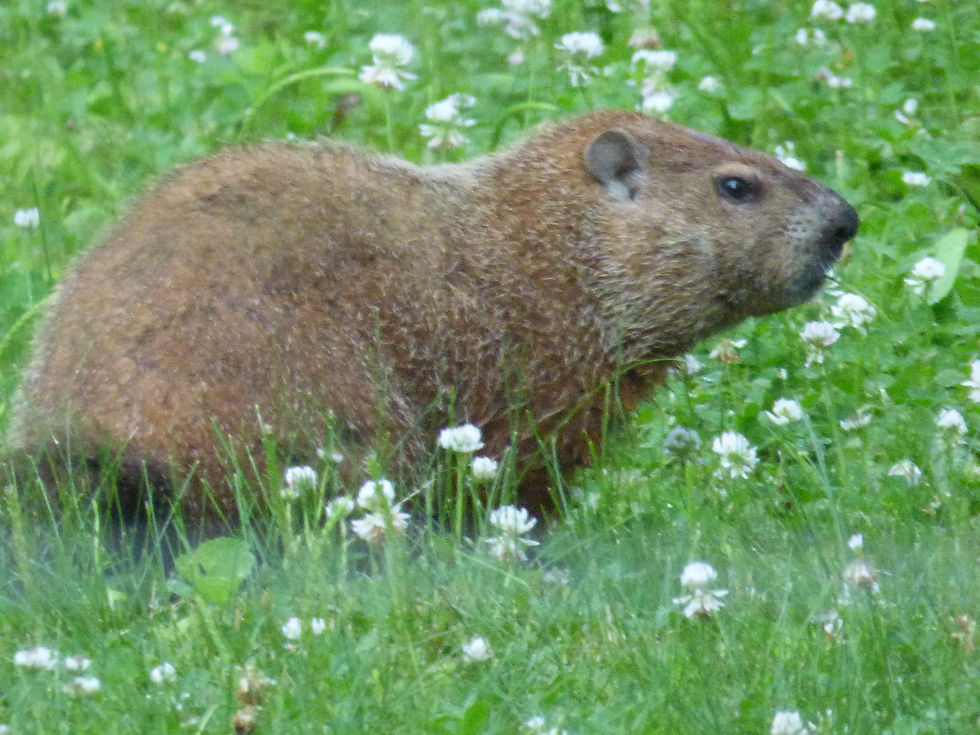
The past few weeks a woodchuck, alias "whistle pig", has been observed in our neighborhood. It inherited that name from the high-pitched whistling sound used to warm others of danger and it's heavy stout pig like body.
After a brief encounter with Kathy's flower garden, we have been successful in keeping the animal away with a heavy dose of deer and rabbit repellent.
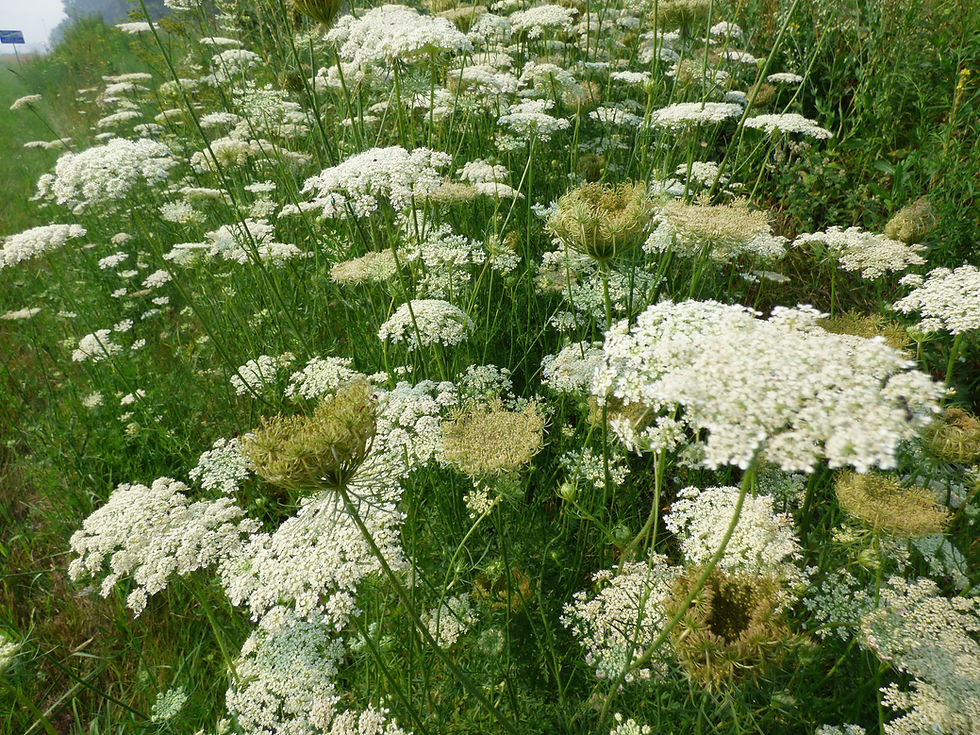
You may have noticed the past couple weeks all the white flowers in the road ditch between Wacouta and Red Wing. This plant is a non-native biennial brought in from Europe and Asia.
It is also known as wild carrot and the roots from the first year plant are edible.
However, one must be careful because this plant is easily confused with the deadly poison hemlock.
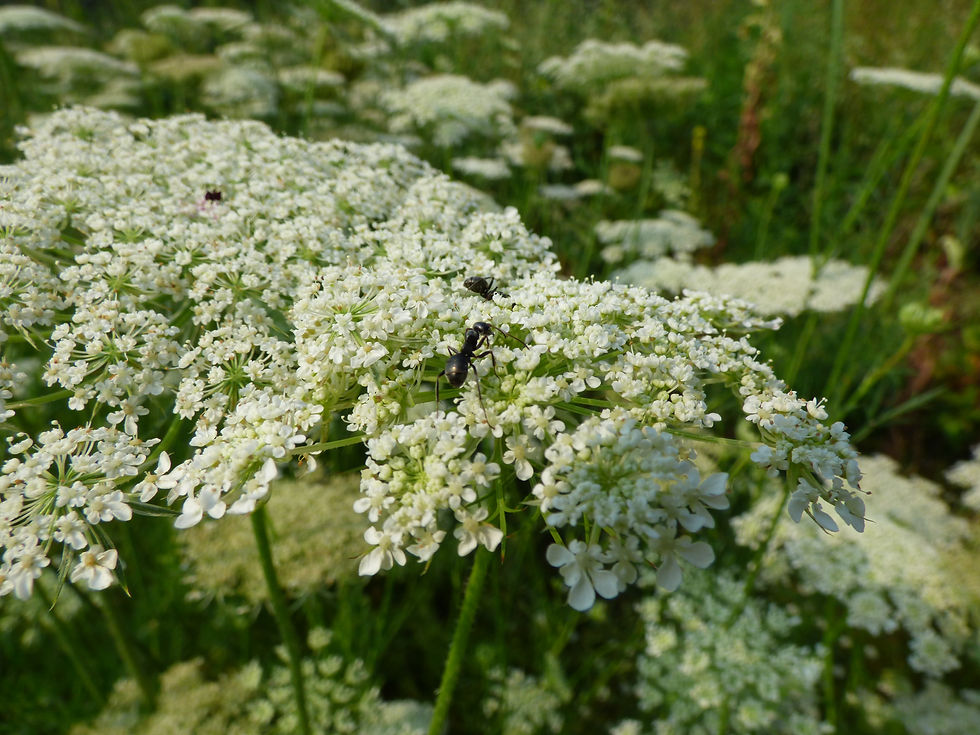
This plant gets it's name from a legend about a British queen who pricked her finger with a needle while making a white lace. A drop of blood fell onto the fabric and explains why a dark red floret sits at the center of the cluster of white flowers.
This red floret attracts insects which assist in pollination.
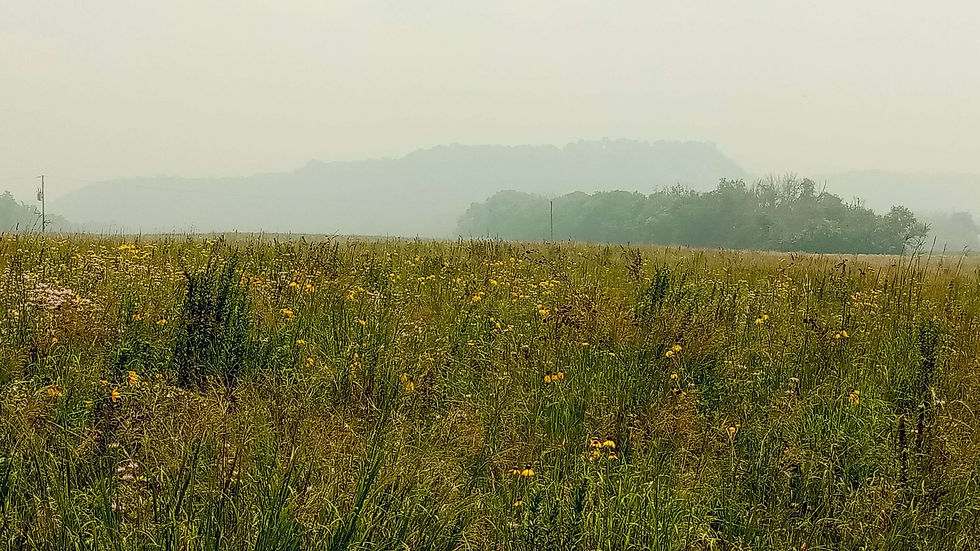
When I woke up in the morning of July 16th, I discovered nearby Rattlesnake Bluff was nearly obscured by wildfire smoke from northeast Minnesota and Canada. This led to hazardous air quality for a couple days.
What we sometimes forget is forest fires have been an integral part of the ecology of the boreal forests for thousands of years. Unfortunately wildfire conditions have been enhanced by our ongoing climate change.
With our warming winters, spruce budworm and larch beetles are surviving to kill ten of thousands of acres of conifers every year. These dead trees provide an incredible amount of fuel for those fires.


I enjoy seeing your pictures of. our beautiful Wacouta and learning about the plants and animals we see, as well a as marveling at the great shots of those we don't see. Being able to learn about our environment as we are observing it each day is truly a gift.
Once again I learned interesting stuff about nature and the rewards you get when you stop to observe.
In Utah we call marmots “whistle pigs”
Thank you! I learn something new with each post.