
"Summer Finally Arrives In Wacouta"
Updated: Jun 30
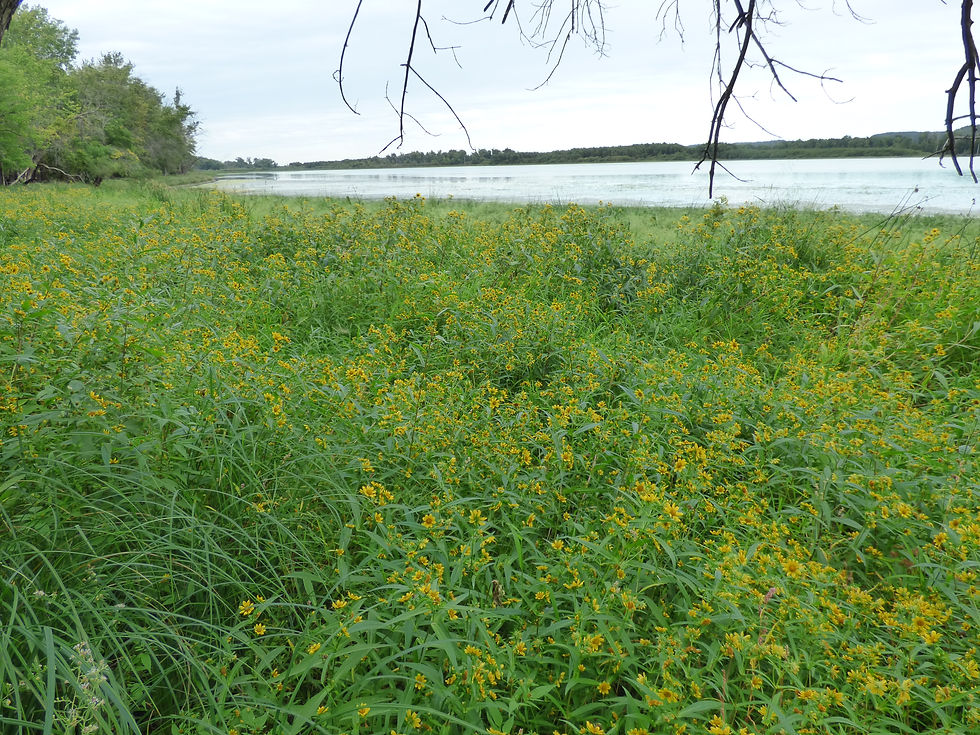
Despite the fact we have received some timely rains the past couple weeks, the Mississippi River is still very low at the level of 3.1 feet today. As the river struggles to get back to a more normal summer level, the Wacouta prairie has responded to the moisture by sending up quite the array of colorful forbs visible along the trail.

As I recently paddled my solo canoe up into Wacouta Bay, several Great Blue Herons were observed standing motionless as they patiently waited to grab smaller prey in their strong mandibles.
Sometimes they will simply use their bills to impale larger fish. With the low water levels, herons can be observed standing just about anywhere in the bay. There are very few places in the bay more than 12 inches deep.

At this time of year, adult herons are kept very busy securing food to feed their hungry hatchlings. Young herons depend on their parents for nourishment for 8 to 10 weeks before they fledge.
I am sure the adult herons I see in Wacouta Bay, deliver food to the nearest rookery located just upstream of the small boat harbor near Bay Point Park.
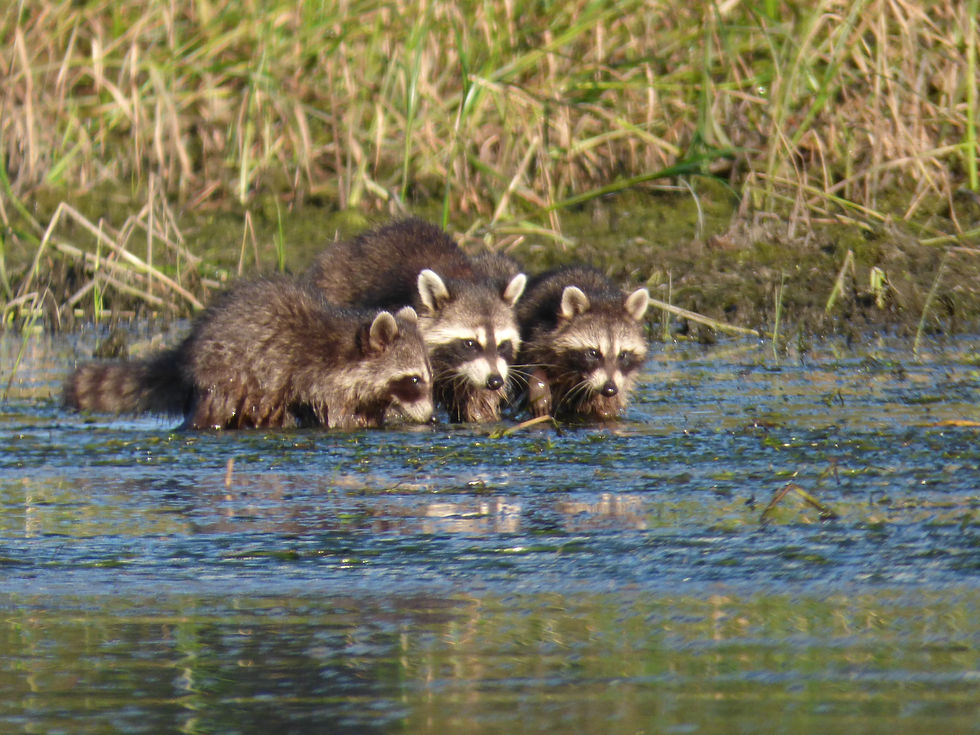
At this time of year young raccoons are exploring and learning to hunt for their own food as they transition from their mother's milk to an omnivorous diet of insects and various aquatic organisms.
These young raccoons also benefit from the current low water levels.

On this particular morning, a hen wood duck and her brood of five ducklings appeared right in front of me as I paddled near shore. It takes about 8 weeks from the time of hatching until they are capable of flying. During this time, the hen keeps her brood close to cover.
Because of the low river levels, more sandy and rocky beaches are exposed creating ideal habitat for killdeer. These birds are highly adaptable and sometimes can be observed nesting in pastures, farm fields and gravel parking lots.
Killdeer lay their eggs directly on the ground right out in plain sight. Their speckled eggs are perfectly camouflaged and blend into the ground. This survival trait allows them to hide the nests in plain sight from predators.
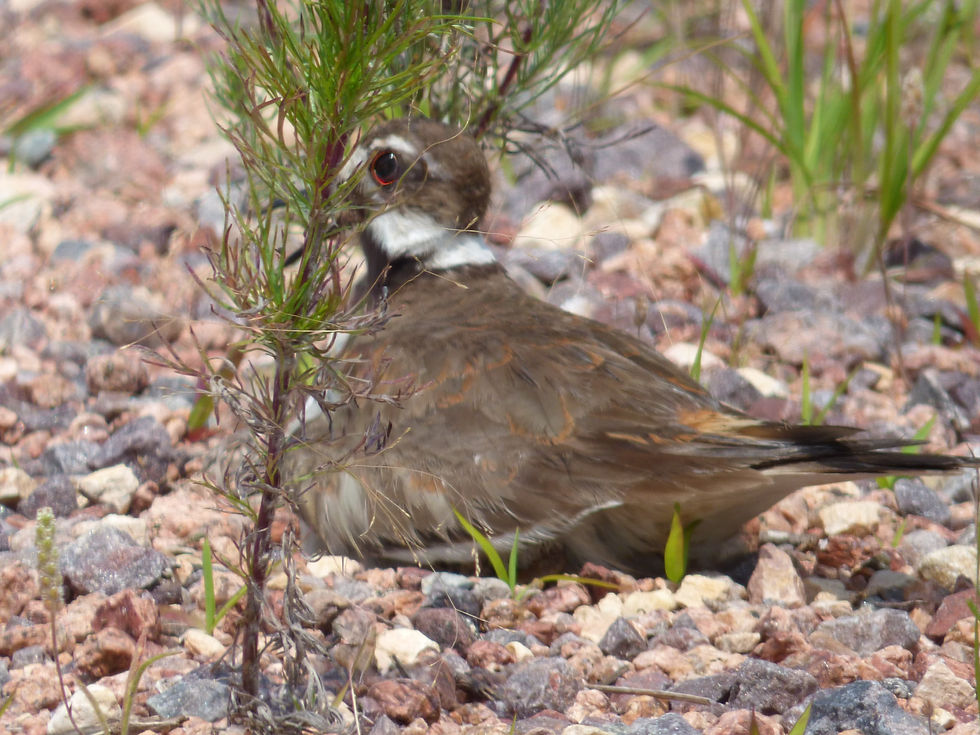
Because of the low river levels, more sandy and rocky beaches are exposed creating ideal habitat for killdeer. These birds are highly adaptable and sometimes can be observed nesting in pastures, farm fields and gravel parking lots.

Killdeer lay their eggs directly on the ground right out in plain sight. Their speckled eggs are perfectly camouflaged and blend into the ground. This survival trait allows them to hide the nests in plain sight from predators.

Some of the earliest edible berries you can find along the trail are mulberries. Berries are ripe when they are red.
The red mulberry species is native but very rare except for the far southeast corner of the state. The mulberries we find along the trail are the non-native white mulberry.
European settlers planted the non-native white mulberries to raise silkworms, which fed the silk industry. This effort subsequently failed and the invasive species became quite common. Both species produce edible red fruit.

On June 19th, I picked enough mulberries to make a mulberry peach cobbler. The entire time I was harvesting the berries a pair of gray catbirds were nearby scolding me with their raspy mew which sounds like a cat.
Recently Steve and Sue Betcher had their 6 year old grandson Bode visiting on their beach. Bode was climbing a nearby mulberry and eating ripe berries on his way up. That is until he came face to face with a young raccoon also feasting on the available fruit. Needless to say, Bode made a quick retreat.

This prairie plant is also known as Butterfly Milkweed. Adult monarchs will feed on the nectar from this colorful prairie plant.
Monarch caterpillars will also use this plant as a host plant, but prefer to use the common milkweed because of it's toxic sap keeping away predators.

As I mentioned in the introduction, numerous colorful prairie forbs have come to life along the trail since the recent rains. These spiderworts with Rattlesnake Bluff in the background create a memorable Wacouta scene.


Once again I’m impressed with nature by Bruce’s observations. It’s good to come down to earth in this busy world.
I’m a bit jealous of his solo canoe trips ….
What a great way to enjoy life.
As always, Bruce, very informative, interesting and love the pictures!!