
"Spring Magic And Wonders On Wacouta Bay"
In the early morning of April 15th, I ventured out in my solo canoe to check out new arrivals in and around Wacouta Bay. I encountered a number of interesting wildlife phenomena revealing significant signs of the arrival of spring.
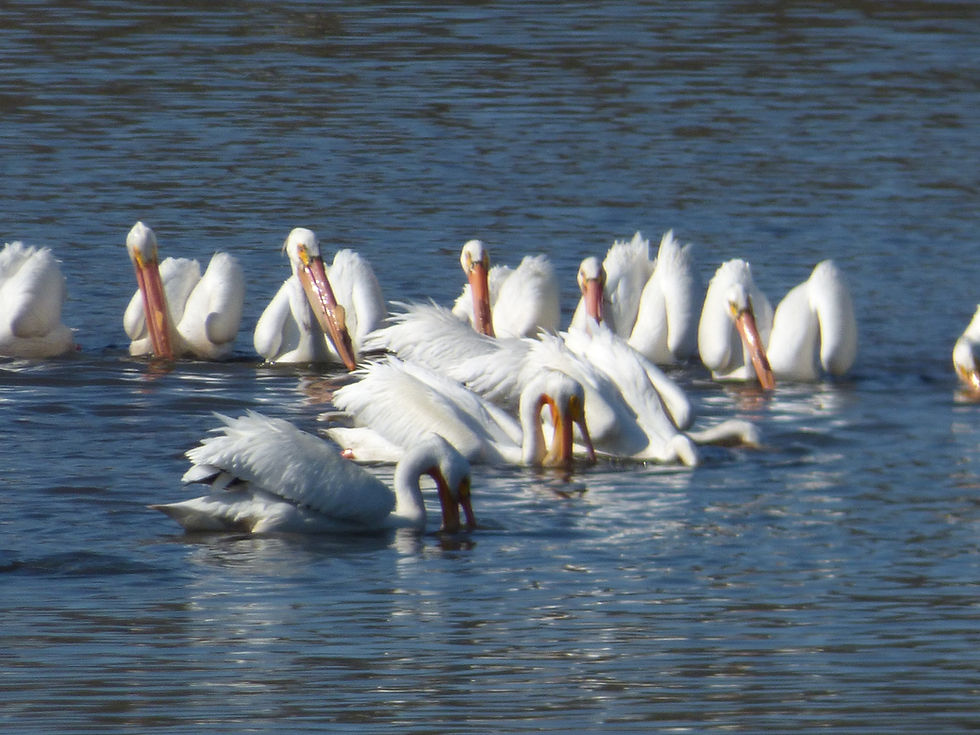
On that adventure, I observed several small flocks of white pelicans scattered around the bay. These small groups are typical now because the birds are in the middle of their spring migration.
Eventually these pelicans will arrive at their nesting grounds in southwest Minnesota and eastern North and South Dakota.
If you look closely at the upper mandible, you will notice a temporary bony growth called a carnuncle. These growths appear on both male and female adult birds during the breeding season to attract mates and establish territories.
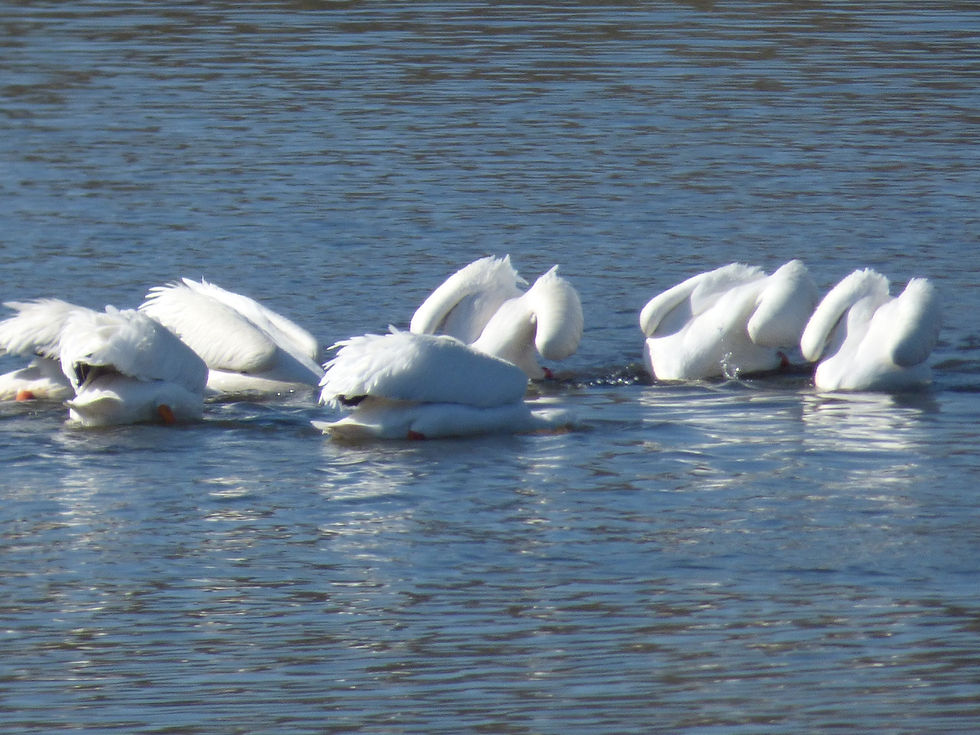
Unlike the brown pelicans of the Gulf Coast states that dive headfirst into the water to feed, white pelicans eat mostly small fish in shallow water.
These pelicans forage in groups large or small by swimming in circles on the surface, then dipping their large bills to scoop up the fish. Finally, they raise their bills to drain water allowing them to swallow the small fish.
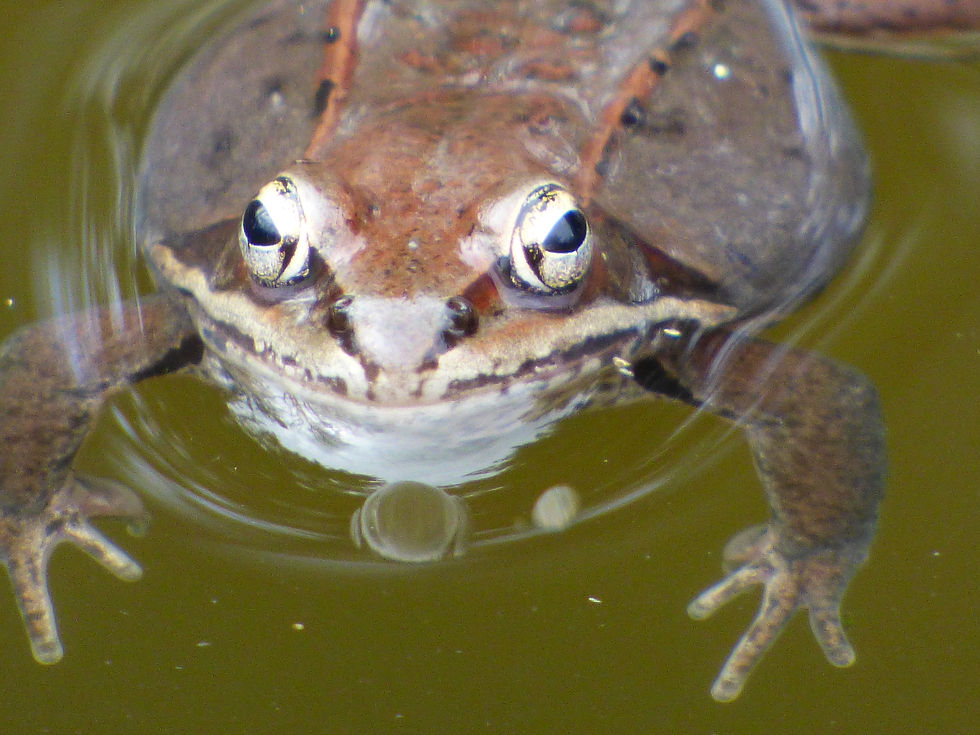
As I paddled next to the heavily vegetated shoreline, the sound of wood frogs calling was almost deafening. This species of frogs is found in forested regions of Minnesota and is typically the first to be heard calling in the spring.
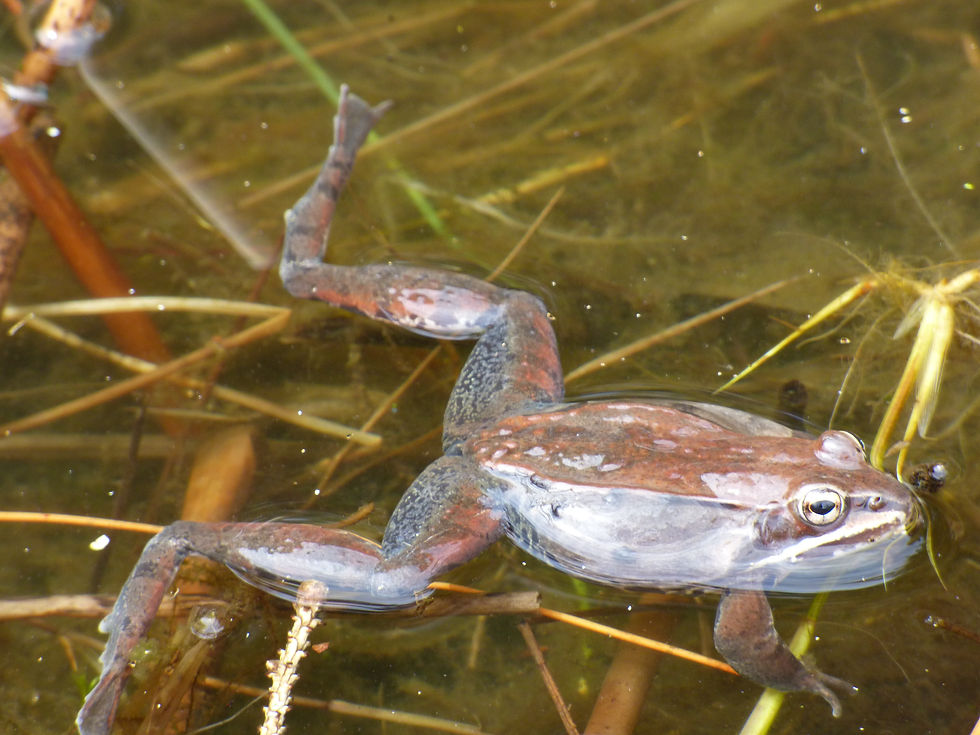
Male wood frogs have paired vocal sacs and call while floating on the water. After mating, the female lays from 1000 to 3000 eggs which hatch in about 3 weeks. The tadpoles will mature in 6 to 9 weeks.
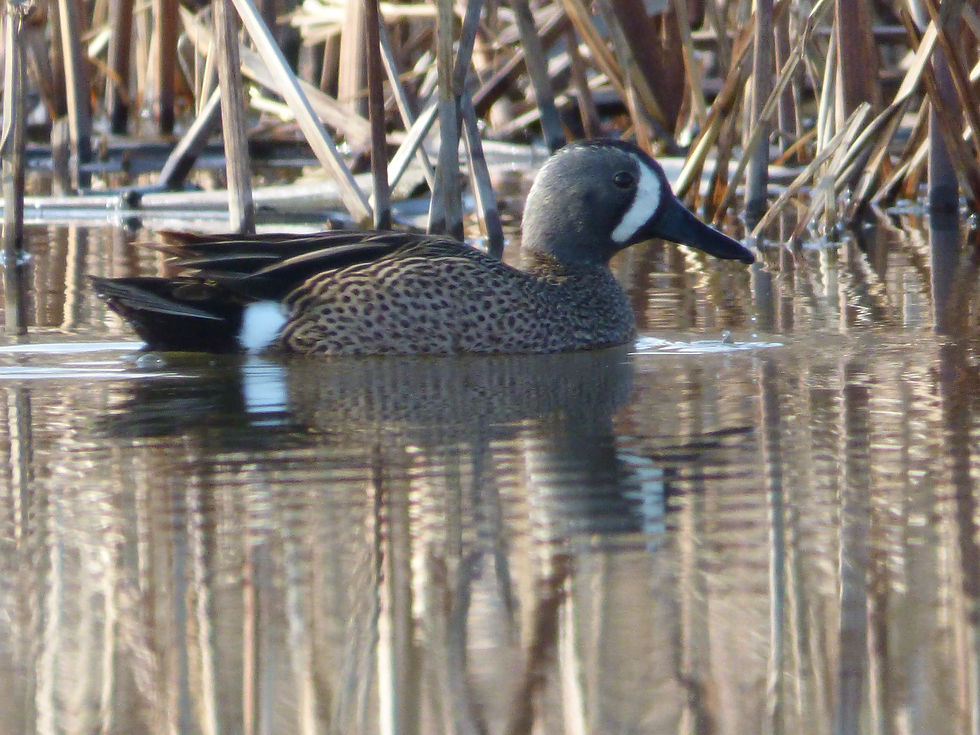
The most interesting part of my time was spending near the newly built beaver pond. There was continuous activity of Canada geese, wood ducks, mallards, red-winged blackbirds and an occasional bald eagle flying overhead.
This drake blue-winged teal seemed to be the least concerned with my presence. Unlike wood ducks, teal nest on the ground among grasses or other herbaceous vegetation. Their desired food consists of aquatic insects and various crustaceans.

The most unusual and brightly colored waterfowl I observed swimming near the beaver dam was this drake hooded merganser. They are most common in the forested areas around the Great Lakes.
Like one of our most common local waterfowl the wood duck, they prefer to nest in cavities of live and dead trees. Because they arrive in the spring before wood ducks, they have been known to nest in artifical nesting boxes put up by local waterfowl enthusiasts.

For some of us who might have been involved in some way in the long tradition of "snipe hunt" pranks during summer camping adventures, you will be pleased to know snipe aren't made up birds.
These long-billed, plump birds are among the most widespread shorebirds in North America. Snipes use their long bills to probe for a variety of insect larvae, snails, crustaceans and worms.
Once in a while, they have been known to eat small frogs and fish. I was fortunate to observe this snipe go from one end of the beaver dam to the other hunting for a meal.
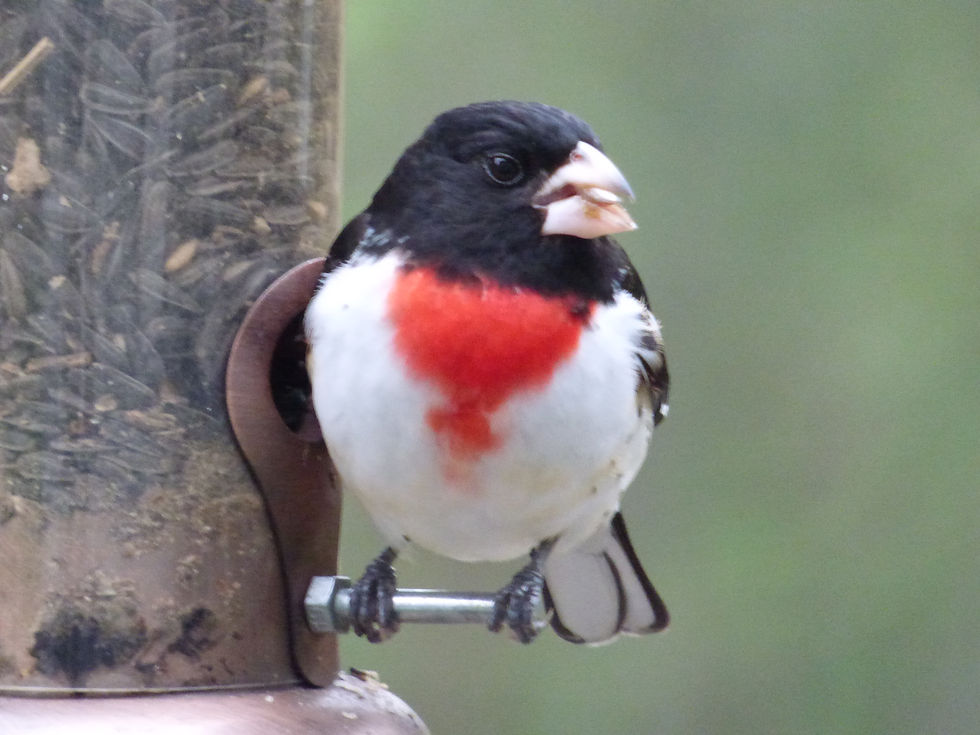
Listed below is when we first observed these migrants arriving a our bird feeders.
Yellow-rumped Warbler April 18
White-throated Sparrow April 19
Brown Thrasher April 23
Baltimore Oriole April 23
Rose-breasted Grosbeak April 23

Thanks to Nancy Barth, a Nature Notes reader, this photo is of an adult bald eagle and four immature eagles taking advantage of food washed up on shore.
This photo helps us understand why it takes an eagle several years to obtain a white head and tail. The first year of life, an eaglet is dark brown. These immature birds will gradually go through several molts for the next four years to obtain their adult plumage.

This amazing photo was contributed by Wally Siewert a retired employee of Frontenac State Park for many years. Wally is currently volunteering for the park and has the responsibility to regularly check a number of bluebird nesting boxes.
While hiking his bluebird trail recently, he captured this very rare photo of a white hen turkey on a nest. If you look closely, the turkey does not have a pink eye. This genetic condition of a lack of partial pigment is known as leucistic rather than albinism.. In either case, Wally's sighting was an extremely rare experience.

As I was eating breakfast early in the morning of April 16th, a pair of mallards appeared just outside our sun room window. Since losing our backyard pond, we never observe waterfowl in our yard.
I immediately had a flashback to the spring of 1982. Kathy and I had departed on a ten day trip leaving our three daughters under supervision of my parents on the weekends and a high school senior student during the week.
When we returned home, we were greeted at the front door by three very excited girls. It seems as though they had convinced the young girl staying with them it was a good idea to purchase two new mallard ducklings from the Ben Franklin store in Red Wing.
As we entered the house, we soon discovered our kitchen had been cordoned off in favor of the ducks' food and water. As the excitement reached a crescendo, we were taken upstairs to watch the ducklings display their swimming skills in a half filled bathtub.
As these ducklings matured and feathers developed, one was named Willard and the other Mildred. They remained some of the best pets we ever had in our family until the snow started to fly.


What a busy time of year and wonderful spring welcomer blog! Love it and the amazing photos!
I love your articles Bruce!
Amazing photos!!! Such interesting descriptions . . . . .
Great description of the spring arrivals and how fun for kids to have ducks for pets!