
"Interesting Impacts Of Our Drought And Climate Change"
The dry summer weather and the sustained periods of high temperatures have left their marks on the local environment.
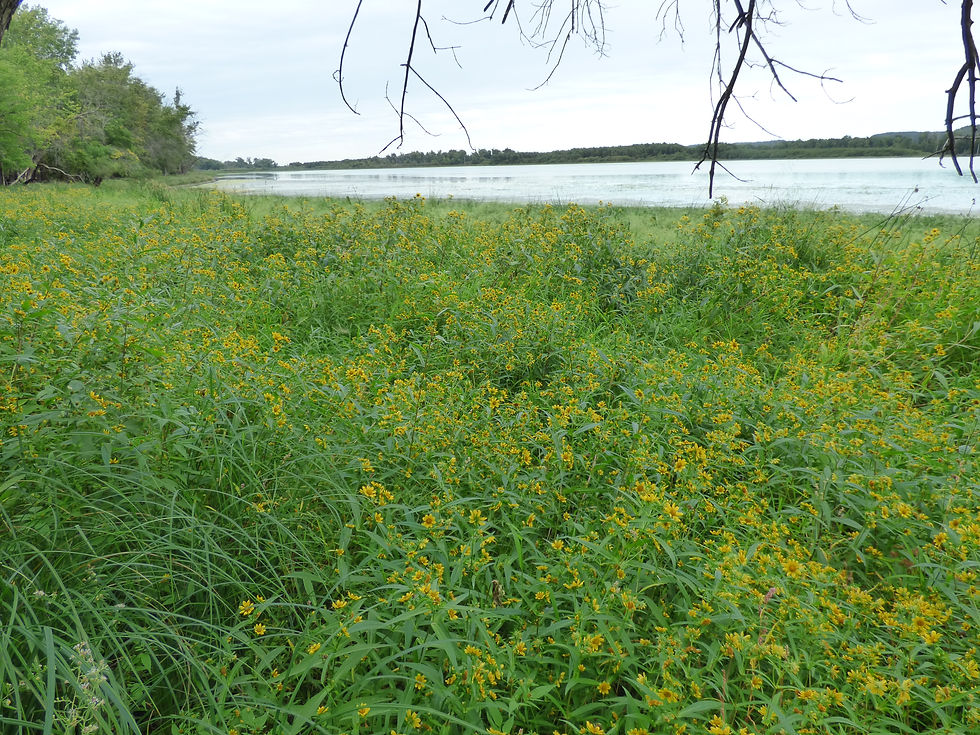
Due to the continuous low water levels on the river all summer, significant stretches on the shoreline on the east end of Wacouta Bay have created ideal conditions for sneezeweed a native hardy and upright perennial.
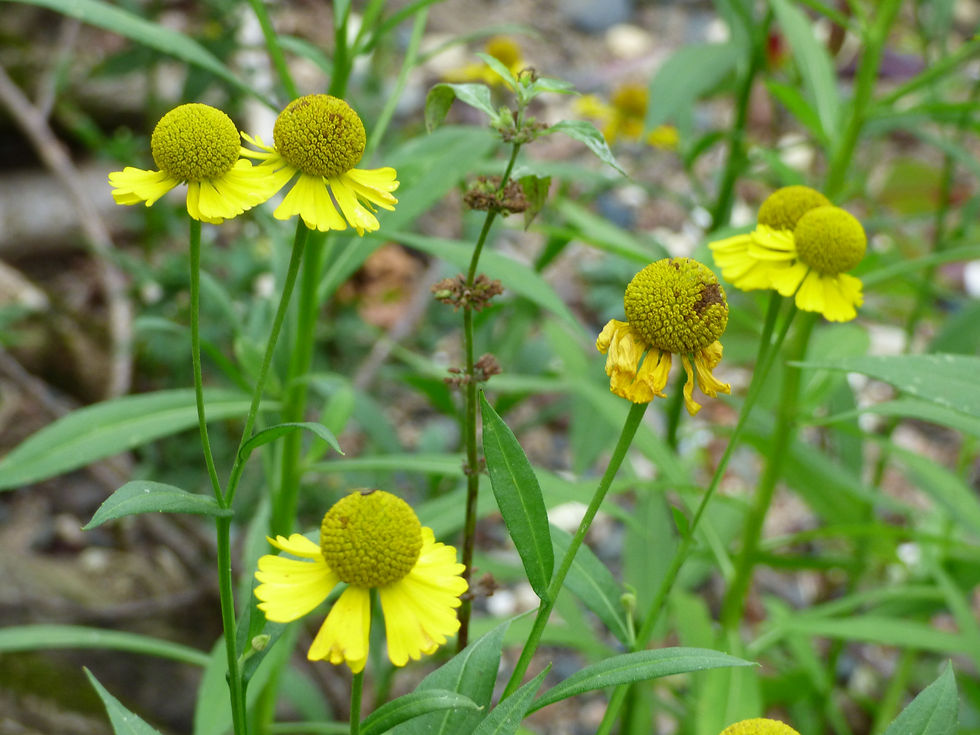
Fun Fact: Historically dried and crushed leaves from this plant were used to make a medicinal snuff that triggered violent sneezing. People at that time thought the sneezing would drive out evil spirits or sickness in the head.
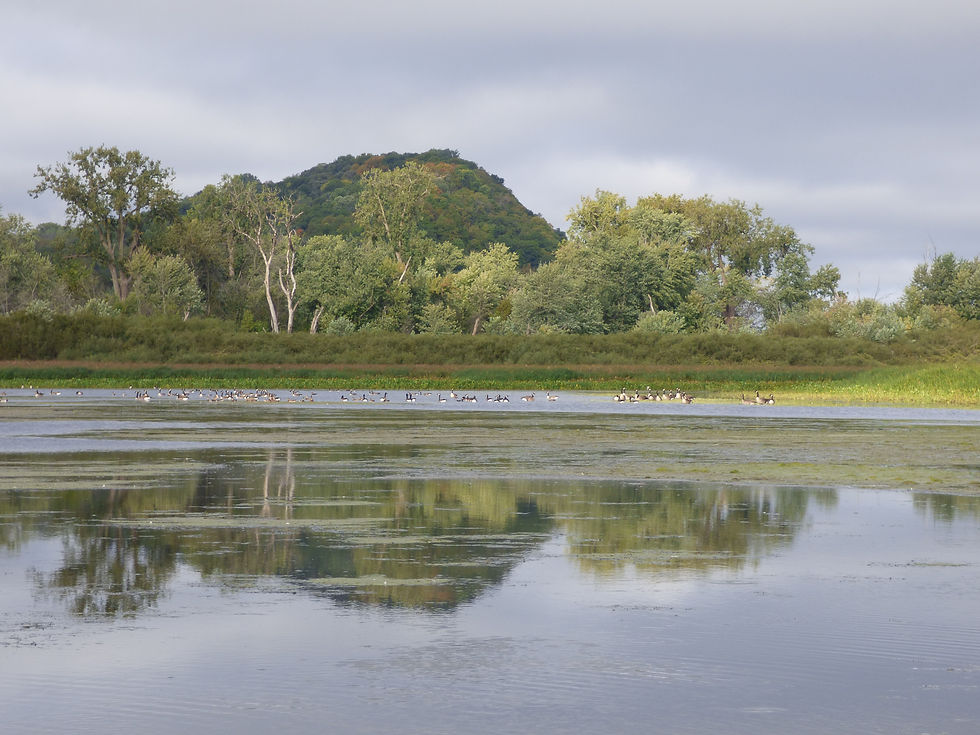
In the morning of August 23rd, I decided to paddle my canoe and see if I could reach the end of Wacouta Bay. Earlier in the summer at the same water lever (2.4 feet), I was stopped by thick stringy aquatic vegetation collecting on my paddle.
Despite the fact the depth of the water in the bay was just 4 inches, I was successful. Most of the vegetation I encountered earlier had decomposed and sunk to the bottom.
It wasn't until I was within 100 yards of the upper end, that I observed any waterfowl. There were around 40 of our local Canada geese, a dozen mallards and a few wood ducks. On Saturday September 26th, the Minnesota waterfowl season opened.
It is no wonder, not a single shot was heard in the area on the first weekend. There are several factors responsible for the lack of birds. No doubt one factor has been the warm temperatures delaying freeze-up on northern waters.
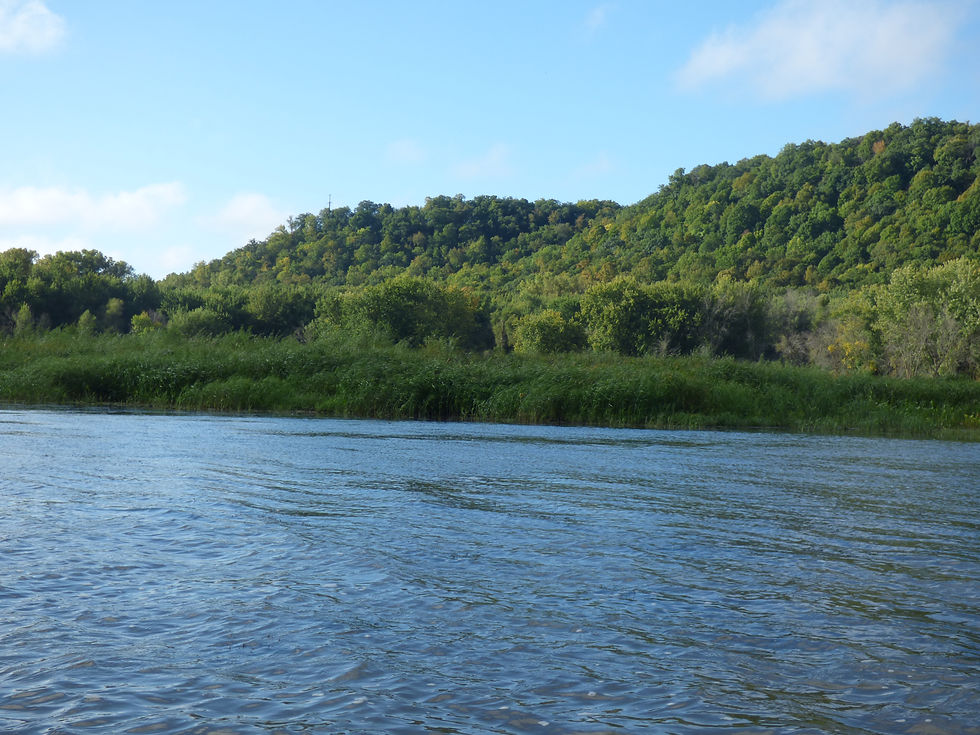
With the current low water levels, vegetative growth on the Bullard Creek delta has advanced close to 1/4 mile away from the bluff. It now extends close to one half of the way to the other shoreline.
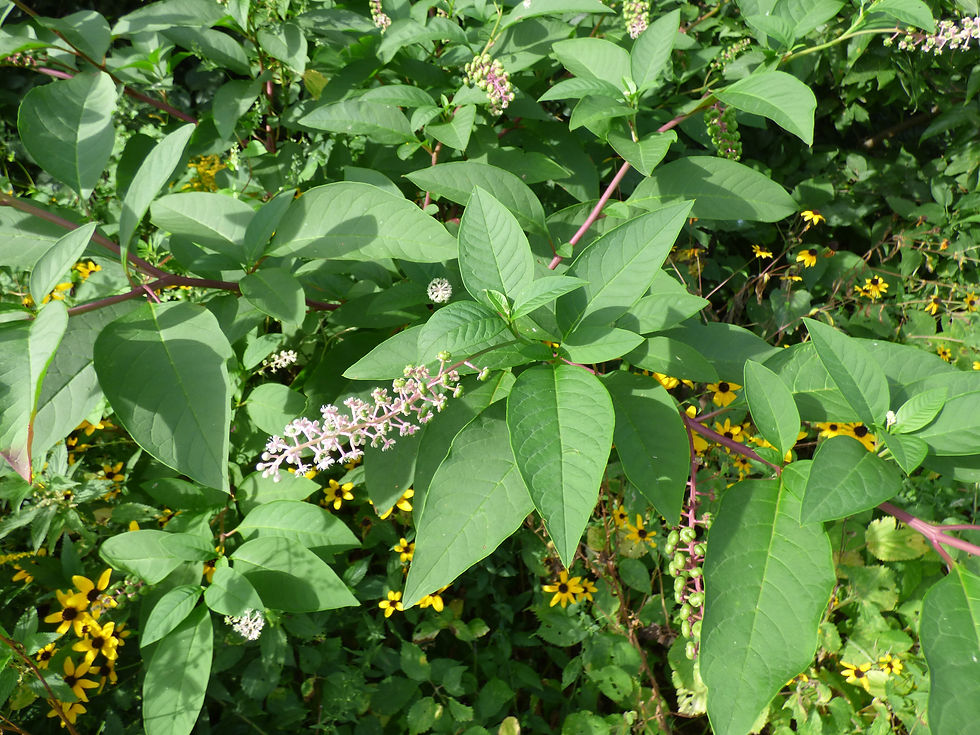
While hiking on the trail around the prairie, I discovered a new plant growing in the state park that I haven't observed before. It was growing in the woods adjacent to the trail.
Pokeweed is a tall herbaceous perennial that can grow to the height of ten feet. All parts of this plant can be toxic to humans and other mammals if ingested. These toxins are also similar to wild parsnip in that they are phytotoxins which react to sunlight.
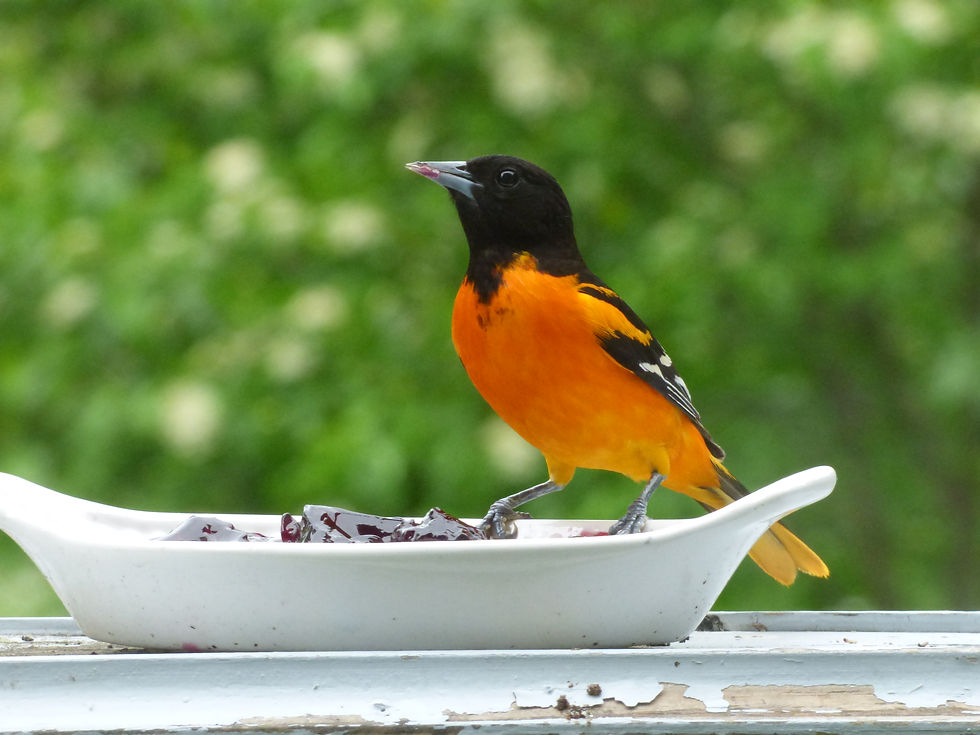
According to the Minnesota Weatherguide Calendar, orioles are out of our area by approximately September 9th. This year we observed our last oriole at the feeder on September 8th.
The males usually start leaving by the first of August with the females and young following about a month later. Their fall migration takes them across the Gulf of Mexico to winter in Central and northern South America.
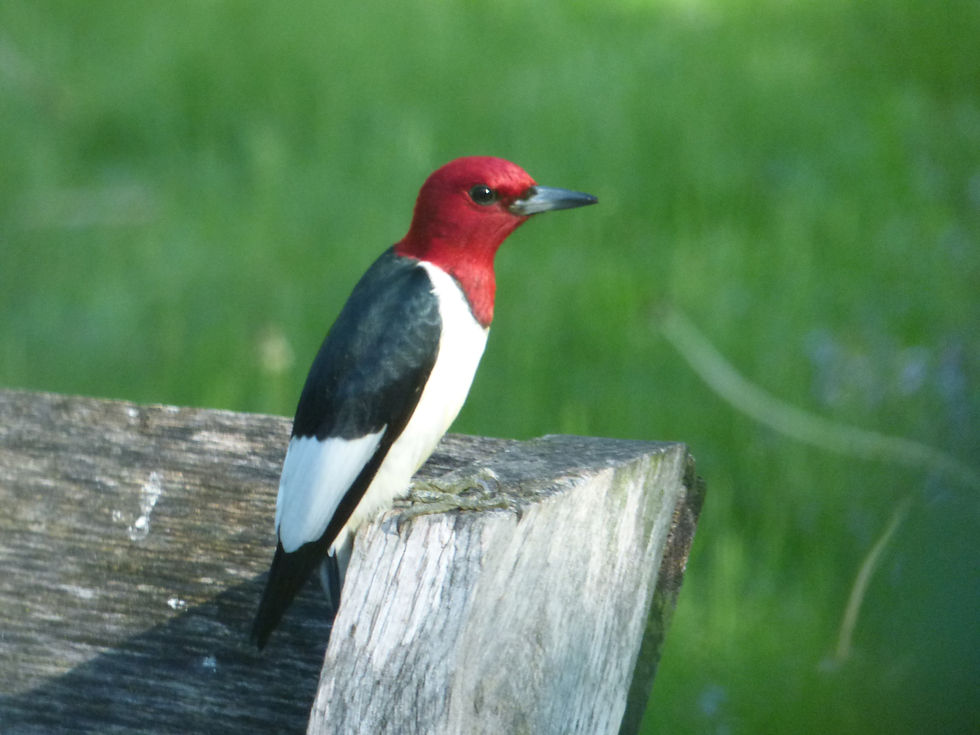
During the early part of this summer, we observed adult Red-Headed woodpeckers at our feeding station three to four times a week. There was every indication they were nesting in a cavity in a large neighborhood oak tree.
During the last couple weeks, an immature Red-Headed woodpecker was a frequent visitor to a dead boxelder tree in the neighbor's yard. These immature birds lack a red head, but have a very distinct white wing patch.
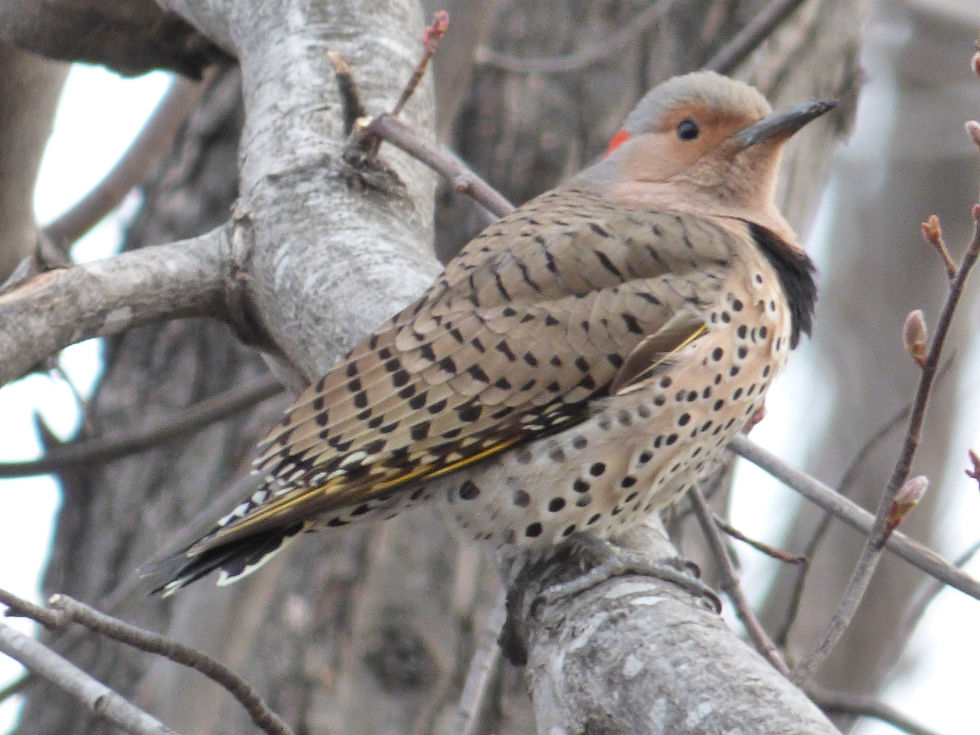
The past couple weeks I have noticed a number of small groups of Northern Flickers in our neighborhood as they begin their fall migration.
The primary food for these birds is insects, especially ants and beetles. Last fall as I was hiking along the edge of a recently burned prairie in Frontenac State Park, I observed a large flock of at least 100 birds feeding on the ground.
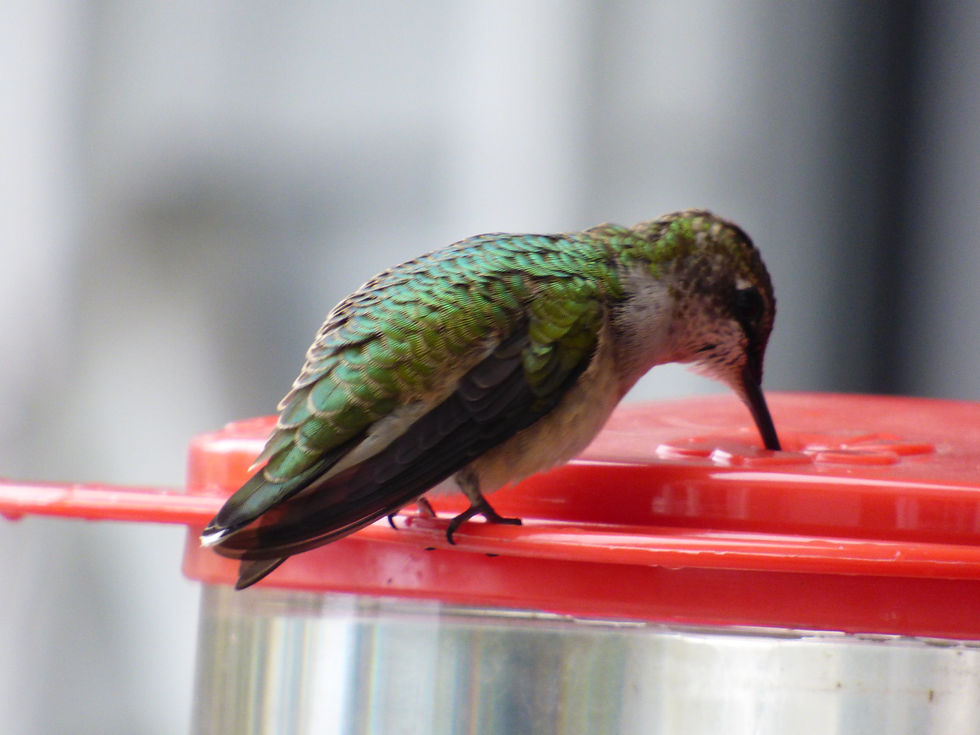
For the past three weeks, we have observed only female and immature hummingbirds at our nectar feeders. Last week only two birds have been seen.
By the end of September, most years they are on their way south on a 500 mile flight across the Gulf of Mexico. To successfully complete that journey, they must double their weight in fat to survive. They do not fly in groups, but usually solo!
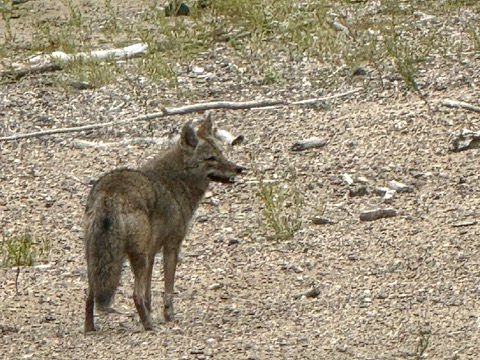
The final photo for this post comes from Nancy Barth on Greens Point. Nancy is a frequent contributor of interesting photos from her part of Wacouta.
Nancy observed this coyote for a few minutes as it traveled the beach in front of her home. This is the time of the year when juvenile coyotes leave their family packs to establish new territories. They soon learn fish, waterfowl and shorebirds washed up on the beach provide much needed nourishment.
On a more personal note, Kathy and I are observing far fewer rabbits in our yard compared to earlier in the summer. We frequently hear them howling in our backyard after dark. We assume they are sharing the news of a fresh rabbit kill.


I learn something from every post, Bruce. Thanks so much for sharing your knowledge and photos. I have sneezeweed in my garden and always wondered how it got it's commone name! Good info on Pokeweed, ugh. I saw flickers by your yard on the trail. Love those birds! Happy autumn!
Another interesting post. I enjoy reading about your observations. The most interesting visitors we have had at our feeder is a western jay and a flock of grosbeaks
We haven't been able to attract orioles in recent years . . . . . I put out grape jelly and oranges, but, no luck.