
"Audubon Christmas Bird Count Comes To Wacouta and more..."
On January 4, 2026 , participants of the Audubon Christmas Bird Count visited and recorded their observations in Wacouta Township.
This post will feature photos of some of their observations as well as a complete listing of birds seen and a number for each species.

For more than one hundred and twenty five years the National Audubon Organization has conducted it's annual Christmas Bird Count.
Local birding enthusiasts/organizations select a day between December 4th and January 4th to conduct this community science project. People interested in becoming involved can contact a local Audubon member for further details.

Involvement can be a backyard count or with a group in an assigned area.
The assigned areas are circular with a diameter of 15 miles. Hence, most of these areas are viewed by driving local roads with periodic stops.

People using a vehicle are encouraged to place a sign in their window alerting suspicious folks that they are not casing out the neighborhood.
Our granddaughter has a friend who returned home to Texas for the holidays. The day after returning home, her family noticed a vehicle driving slowly through the neighborhood. Three of the passengers were using binoculars.They quickly secured the license number of the car and reported the suspicious activity to the police.

Because the CBC has been conducted for so long, it has become a valuable historical resource in documenting serious declines in many bird populations.
In recent years, the Christmas bird counts have been increasing in popularity. The information gathered in these counts provides valuable information to work with in a variety of research projects.

In Minnesota alone, there were 90 separate counts conducted this holiday season. One of the rules for participants involved in the backyard feeder counts is to only report the maximum number of a species at one moment in time. This prevents counting the same bird more than once.
The information provided below comes from our own backyard feeder count.
Black-capped Chickadee 1
Northern Cardinal 3
Downy Woodpecker 6
Hairy Woodpecker 2
Red-bellied Woodpecker 2
Pileated Woodpecker 1
Dark-eyed Junco 20
American Goldfinch 6
Mourning Dove 5
Blue Jay 3
White-breasted Nuthatch 1
American Crow 1
American Tree Sparrow 6
House Sparrow 1
House Finch 2
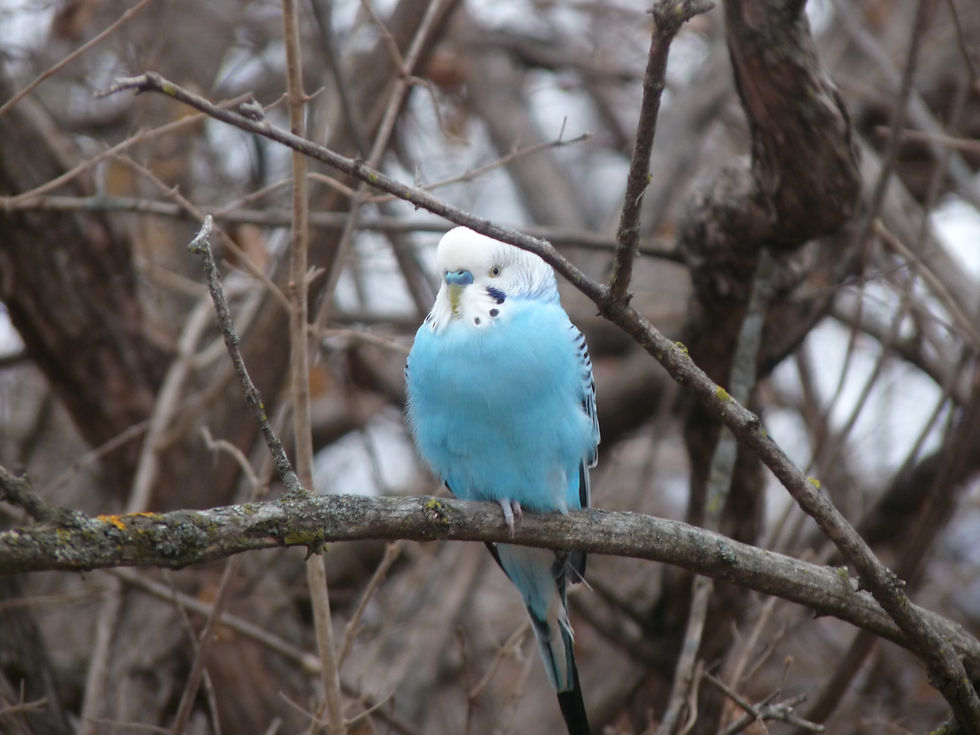
During the CBC of 2011-2012, Kathy and I were assigned an area that included Florence township. As we were driving through Frontenac Station, we spotted what we thought was a ceramic bird perched in some shrubs of a homeowner's yard.
Much to our surprise, it turned out to be a light blue living parakeet. Even more surprising was learning later it had survived several more weeks in the frigid temperatures.

At the beginning of December, the river was wide open off Presbyterian Point. With a temperature of minus 11 degrees in the early morning of December 4th, "sea smoke" filled the air over the river.
With a slight south breeze blowing, this rising warm water vapor moved across the river and quickly changed to a solid as it came in contact with cold tree branches avoiding the liquid phase in the transition.
Interestingly enough, there was absolutely no hoar frost on the Minnesota side of the river.
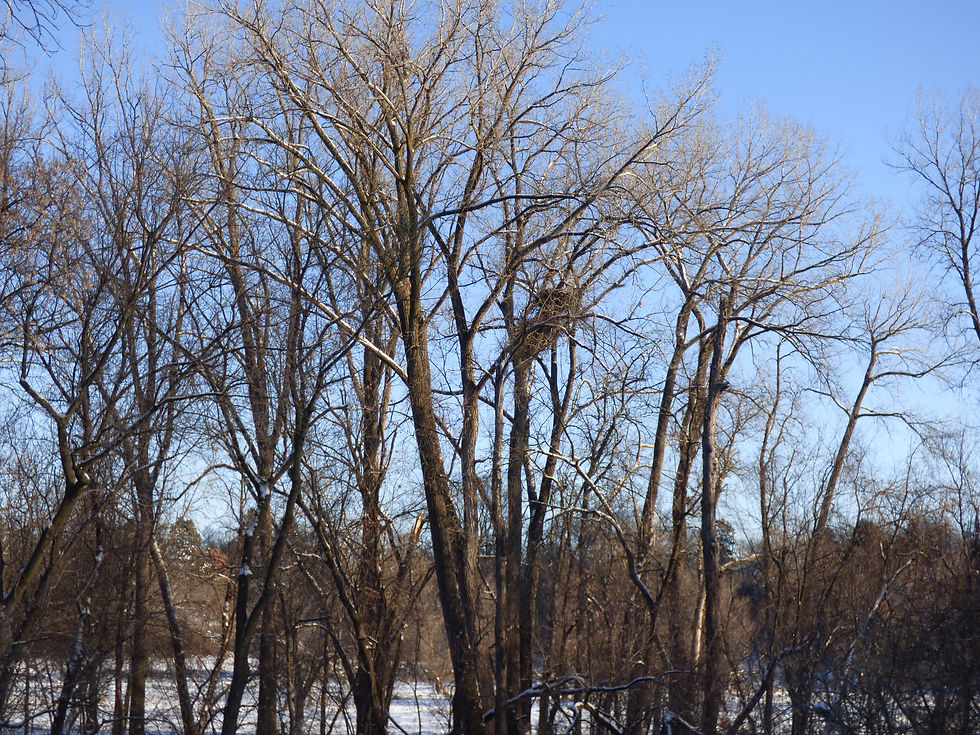
By the end of October and early November, the photo period decreases each day. When this happens, the eagles perceive the spring nesting season has arrived.
This explains why early winter courtship and nest repair and construction begins. This past November, Kathy and I observed eagle nest repair taking place on the nest on the Wisconsin side of the new bridge.
If you look closely at this photo, you can see one new nest above the existing nest.

These nests are located near highway 61 at the east end of Wacouta Pond. The upper nest was built this past November.
It is fairly common for eagles to build another nest close to an existing nest. This is done in case the older nest fails or is damaged in a storm.
With that said, this is the first time I have ever observed one nest built directly above an existing nest.


Amazing hoar frost photo!
Thank you once again for interesting reporting and beautiful photos! You have a keen eye to spot the eagle nest. We have not seen any hoar frost this season but did notice an alpen glow on the WI bluffs one evening a few weeks ago.
Interesting to see that your list of backyard birds is almost identical to ours, in Lake City, although lately we have had the addition of 4 pheasants sitting in our crabapple
tree.